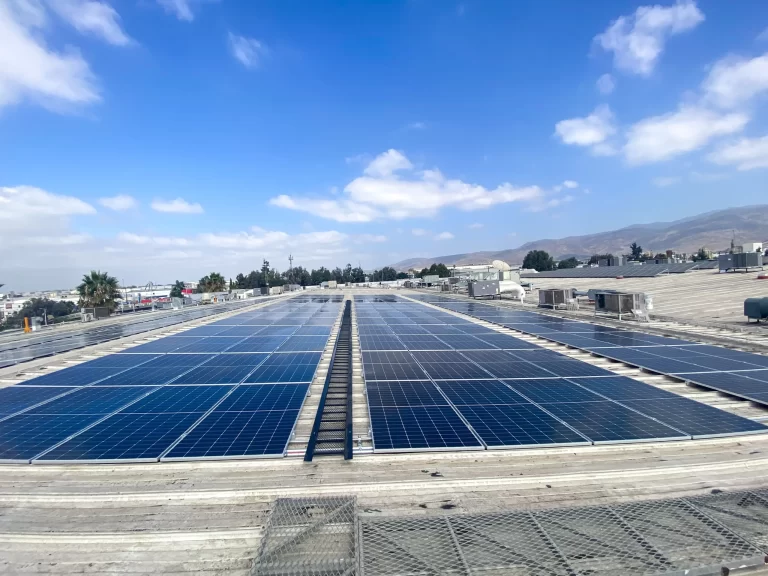
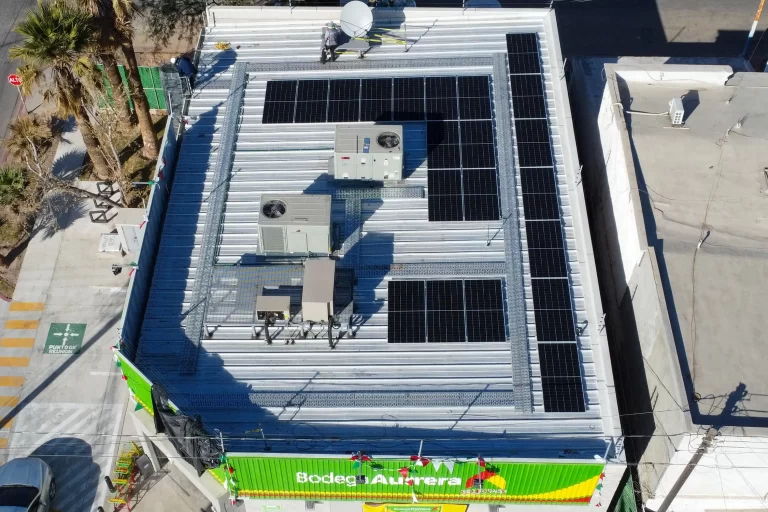
Net metering is the legal mechanism that lets CFE credit the energy your solar panels generate and feed into the grid. Without this, residential solar panels in Mexico would have practically no economic sense.
What is net metering?
It’s a scheme regulated by the Energy Regulatory Commission (CRE) via the Grid Interconnection Contract DG-01 (small-scale Distributed Generation). It lets your solar system feed excess into the CFE grid and pull it back when needed.
How it works technically
- Your panels generate energy during the day.
- Your home consumes it first (direct use).
- If you produce more than you use at that moment, the excess exits your meter into the CFE grid.
- Your bidirectional meter records both directions.
- At night or on cloudy days, you pull from CFE as always.
- At bimester close, CFE compares: energy consumed vs energy delivered.
- If you consumed more, you pay the difference. If you delivered more, that balance becomes energy credit for the next bimester.
The bidirectional meter
For this to work, CFE must swap your traditional analog meter for a bidirectional electronic meter. This swap is free and CFE does it after approving your DG-01 contract. Full process takes 15-30 days.
Net metering limits in Mexico
- DG-01 (small Distributed Generation): up to 0.5 MW. Covers 99% of residential and small-commercial cases.
- DG-02 (medium Distributed Generation): 0.5 to 1 MW. Medium industry.
- Distributed Clean Generation: above 1 MW. Different process.
Can I stop paying CFE 100%?
Almost. Even with credits in your favor, CFE charges a minimum capacity fee (~$50-200 bimonthly) for staying connected to the grid. To eliminate all payments you need off-grid (with batteries and no CFE grid).
Conclusion
Net metering in Mexico is the backbone of residential solar success. Without it, you couldn’t “store” energy for the night or cloudy days. It’s what turns the CFE grid into a “giant free battery” for your solar system.